


In theory, we know that being creative is good for us. We know it expands our skills, uses our brain in different ways, reduces stress and is just good, plain fun. Or it can be. As we age, many of us start to judge our creations and decide we’re “not artistic.” Feel familiar? Read on to learn why this mindset needs a re-frame.
For an engaging conversation with an expert in this field, listen to my latest podcast episode featuring Danielle Schulz, Associate Director for Lifelong Learning and Accessibility at the Denver Art Museum in Colorado.
On a recent visit to see my parents, my mom busted out some fabric and ribbon from her stash, we plugged in the sewing machine and created custom travel shoe bags for friends. Compared to some previous sewing projects, like prom dresses and re-upholstering chairs, this was simpler, but still creative! We measured, we cut, we matched fabrics and ribbons and most importantly, we connected.
There is a growing field of research, education and advocacy known as “Creative Aging.” Lots of research demonstrates why being creative is so important as we age, and it’s often for reasons you might not think of. Being creative is so important for older adults, and it’s also really important for caregivers. Who knew? I didn’t.
1. Being creative builds connection and wards off social isolation.
Going to a museum or a performance is often a social outing encouraging deep looking, engagement and conversation. It doesn’t have to be The Met! Going to a high school musical performance or an art show at your local library counts. Spending time drawing or making a collage is a great way to spark conversations.
2. Creativity is skill-building at any age
Danielle explained that creativity is crucial for problem-solving, utilizing life experiences, and emotional engagement in learning. Creative pursuits like drawing, painting, and making music are skill-building activities that challenge our brain, enhance cognitive function, build new neural pathways and increase neuroplasticity.
3. Art doesn’t have to be fancy
No giant canvases and expensive paints are needed! But do set aside a small budget to invest in art supplies to engage in with your loved one. Danielle recommends supplies like nicer quality pens or pencils; air dry clay (including Crayola’s version!) which is great for working motor skills; or starting with collage from found bits of paper or images around the house. Collage can eliminate the “fear of the blank canvas” and be an easy way to start!
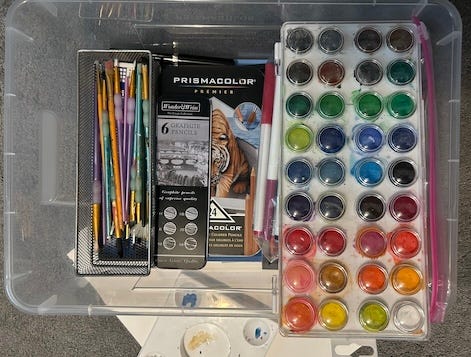
4. Art-at-home options
For some, it might be challenging to get to museums or other venues, but more and more organizations are providing great online alternatives. You can look at the “Educational Offerings” from many cultural institutions and adapt them for your own use. Here are just a few sample ideas to get you started.
Denver Art Museum Art at Hand Program brings art kits to seniors
Frye Museum in Seattle offers excellent virtual experiences for older adults that include discussion guides
Metropolitan Museum of Art 360 video series lets you view the museum from home
The Colorado Ballet offers programming for older adults and video options online
Your local library is an amazing resource for access to arts and passes to venues.
5. Creativity is important and possible for those with cognitive impairment or physical limitations
Many libraries offer Memory Cafes or other events geared towards those living with memory issues. But you can also adapt in-home activities slightly to accommodate some special needs. For instance, Danielle explains how we can give “step-stop” instructions and use open-ended prompts to accommodate cognitive disabilities. Emphasize the process over the “end product.” Make creative time an opportunity for conversation and storytelling. And don’t forget to honor and respect the past artistic experiences of whomever you are working with.
6. Art for Caregiver Well-Being
Did you know that art and creativity are equally important for caregivers? Danielle shared how creativity helps in processing emotions, finding connection, and achieving a sense of flow. Any art practice, whether visual, fiber, ceramics, musical or writing, allows caregivers to externalize their thoughts and feelings, which can provide relief and clarity. Appreciating or creating art is a great way for caregivers to manage stress and enhance their well-being.
I hope this inspires you to take some time for your own creative practice, and to find a way to enjoy time and creativity with someone you care for. Listen to the podcast for more inspiration and information from Danielle Schulz, Associate Director of Lifelong Learning and Accessibility at the Denver Art Museum. Every fall they host a Creative Aging Convening bringing together experts and learners in the field and you are encouraged to attend!


